I've watched a lot of food safety conversations, and there's this constant confusion between CCPs (Critical Control Points) and SPC (Statistical Process Control). People talk about them like they're the same thing, or like one is just a fancier version of the other. They're really not. Understanding the difference matters for how you actually protect your products and your business.
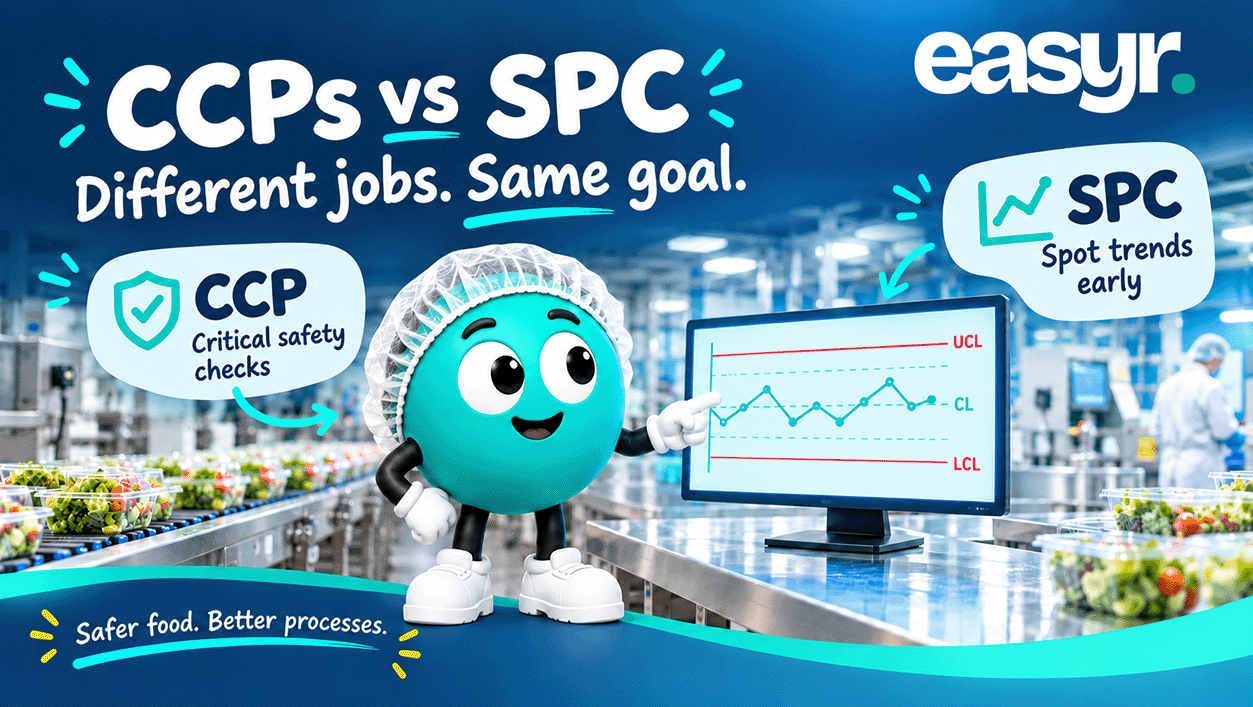
Let me break this down in a way that makes sense. CCPs are the specific points in your process where you can actually control something that matters for food safety. SPC is a way of monitoring your process to make sure it's staying stable and in control. They work together, but they're different tools for different jobs.
What's a CCP, Really?
A CCP is a step in your process where you can either prevent, eliminate, or reduce a food safety hazard to acceptable levels. It's specific. It's documented. It has critical limits. Maybe it's your cooking temperature for a ready-to-eat product. Or your pH control in an acidified food. Or your metal detection step before packaging.
The whole point of a CCP is that if this step goes wrong, food safety is at risk. That's why it's critical. You monitor it because you have to. You record it because you need proof that you did. Regulations expect you to manage your CCPs. They're non-negotiable.
How SPC Fits In
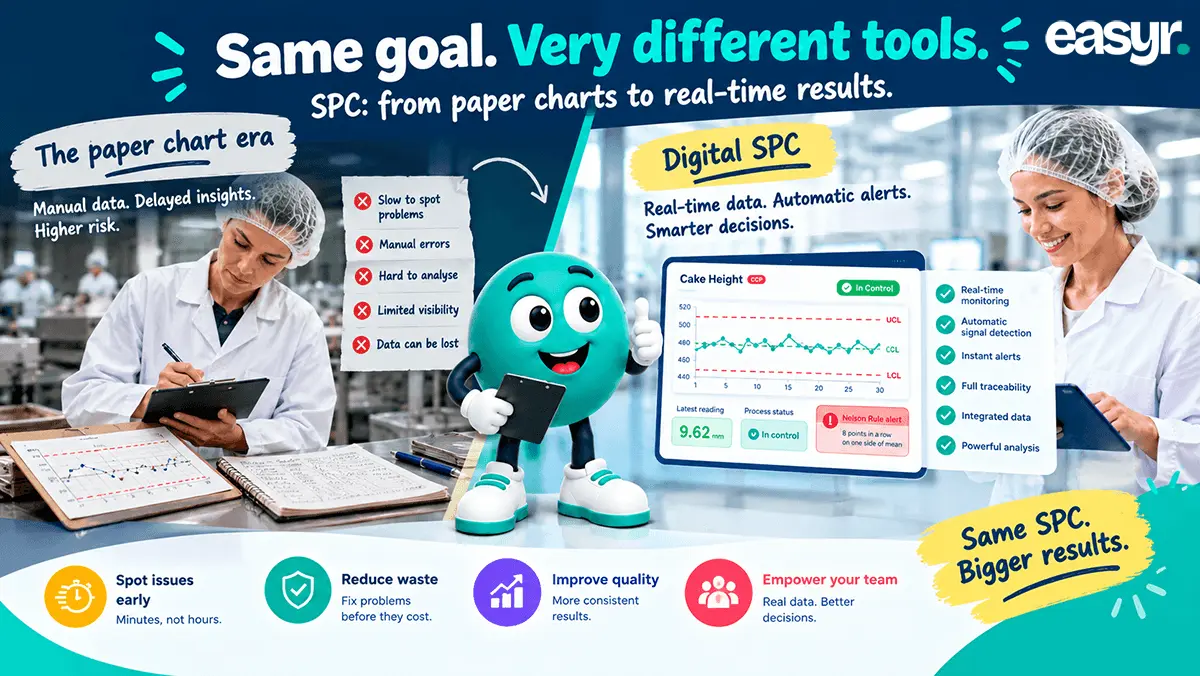
SPC is about understanding whether your entire process is stable and predictable. You're taking measurements over time and looking at patterns. Are you getting consistent results? Is the process drifting? Are there trends that suggest something is starting to go wrong?
You can use SPC at your CCPs, absolutely. But you can also use SPC at other places in your process. You might track fill weights, or temperature stability, or batch consistency, or a dozen other things that aren't necessarily critical control points but that matter for quality and efficiency. SPC is your monitoring and understanding tool. It helps you see what's actually happening with your processes.
Here's Where It Gets Important
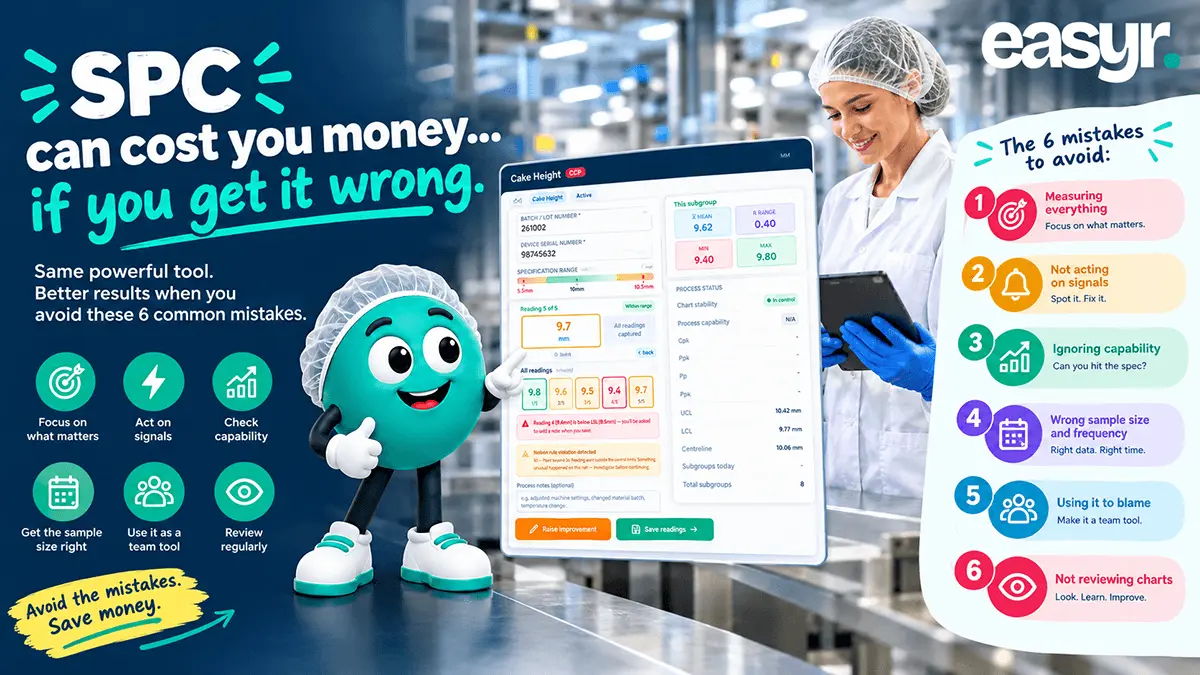
Some people think that if they're measuring their CCPs, they're doing SPC. They're not. Just because you're checking something doesn't mean you're understanding it statistically. You might have your critical limits set based on regulations, but are you understanding the natural variation in your process? Are you catching slow drifts before they become problems? Are you distinguishing between normal variation and real signals that something's wrong?
That's what SPC does. It makes your monitoring smarter. It helps you understand what your data is really telling you. You might be recording your cooking temperature every hour, hitting your critical limit of 72°C consistently. Great. But is the temperature stable? Is it trending upward or downward? Is there one shift that runs consistently hotter than the others? Are you getting closer to your upper limit than you used to be? SPC answers these questions. Just recording numbers doesn't.
The Real Benefit
When you combine CCPs and SPC properly, you get a system that doesn't just react to problems - it predicts them. You know what normal looks like for your process. When something starts to deviate, even subtly, you see it. You investigate early. You prevent issues before they affect food safety.
Auditors see this and they're impressed because it shows you're not just following rules - you're genuinely managing your processes. But honestly, the real win is that you're making safer food and more consistent batches. The audit approval is just a nice side effect.
How to Think About It
Think of CCPs as your essential safety guardrails. SPC is your dashboard showing you how well your whole process is running. You need both. The CCPs keep you out of legal trouble and protect food safety. SPC keeps you running efficiently and catches problems early. Together, they form a complete system for process management.
CCPs are mandatory. They're your baseline food safety responsibility. But SPC is where you actually take control of your processes and start improving them. Where you go from just avoiding disasters to genuinely running great operations. That's the difference, and it matters.